Analysis model: gpt-5.5 xhigh
Zweilight Zone by Capacala - Technical Dissection
Zweilight Zone is Capacala's MS-DOS PC demo released at Assembly 1995. The
Assembly 1995 result file lists it fourth in the PC demo competition with 1039
points, behind Nooon's Stars, Psychic Link's Psychic link, and RealTech's
DX Project.
This pass is intentionally bounded. The release archive, party result, public screenshots, NFO, executable wrapper, and loader/player strings are checked. A silent local DOSBox-X smoke run was also made, but it reached the sound-device menu rather than a full authored route through the demo. I am therefore not claiming a full runtime-to-code reconstruction here.
Old BBS/contact details and personal greetings in the documentation are not reproduced.
Sources Checked
- Demozoo production page: https://demozoo.org/productions/7366/
- Demozoo screenshot set: https://demozoo.org/productions/7366/screenshots/
- Pouet production page: https://www.pouet.net/prod.php?which=2503
- Scene.org group archive: https://files.scene.org/get/demos/groups/capacala/cc_2lite.zip
- Assembly 1995 party archive copy: https://files.scene.org/get/parties/1995/assembly95/demo/cc_2lite.zip
- Assembly 1995 result file: https://archive.scene.org/pub/parties/1995/assembly95/info/asm95res.txt
The party result section says:
PC demo competition:

1  Nooon       "Stars : Wonders of the world"
2  Juice       "Psychic link"
3  RealTech    "DX Project"
4  Capacala    "Zweilight Zone"
The downloaded archive is the Scene.org cc_2lite.zip package:
42ddffb7a7148b33a4fe3ba2d3a06d85804417e4090c02c7163be263d8d344f6 cc_2lite.zip
Archive contents:
CC_2LITE.EXE  1687618  1995-08-13 00:11
MAINTUNE.S3M   167685  1995-08-13 00:11
ENDTUNE.S3M    110796  1995-08-13 00:11
CC_2LITE.TXT     6815  1995-08-13 00:11
FILE_ID.DIZ       352  1995-08-13 00:11
Extracted hashes:
9ff7587350023f62921dc5f12bf2ec7e9c33156135a1a9f424819fe4e161002d  CC_2LITE.EXE
ced78deaa4e1426f5cea9ebc3ca720c0d9f906876bbac01fc6263ac0eb5efdf4  CC_2LITE.TXT
c35df428dda9e7458dda27a0c256ae341ce7537f5610d0f789f0c6a31cef1ffe  FILE_ID.DIZ
ca0688c06cccb3e9923d1b11f129d2e4d3696012ae615dc192662617aed6605a  MAINTUNE.S3M
f66c61bd14fb7d0fc48ee0fdf54ede801aa81170d86618c333cf97ceac5e62f6  ENDTUNE.S3M
MAINTUNE.S3M has the title Flying Through The Moss(3). ENDTUNE.S3M has
the title Streaming. Both have the normal Scream Tracker SCRM marker at
offset 44.
Public Visual Reference
No local effect-route frames are published for this pass. The GIF below is a one-frame-per-second sequence assembled from the public Demozoo screenshots. It is an overview of still evidence, not runtime-timed animation.


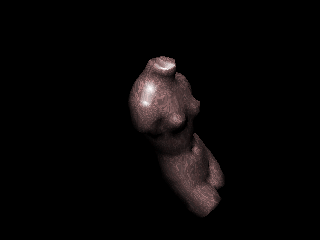


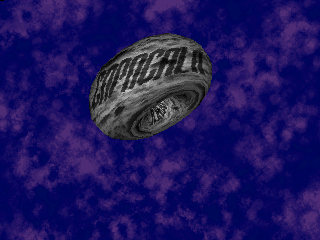


The screenshots show the visual vocabulary described by the release text: this is a vector/object demo rather than a traditional 2-D part chain. The repeated objects are shaded, environment-mapped, or texture-backed; the joke frame even states the intended claim directly: "Only complex vectors and magic environment mapping. No art." The title card and logo frames are therefore not just decoration. They sit next to the loader/player evidence below: the package is a large 1995 protected/extended-memory style demo shell with separate S3M tracks, not a tiny single-effect intro.
Runtime Smoke Boundary
A local DOSBox-X run was attempted only to confirm startup behavior and keep the analysis honest:
Emulator:        DOSBox-X 2026.01.02 SDL2
Capture date:    2026-07-21
Host drivers:     SDL video dummy, SDL audio dummy
Machine:         svga_s3
CPU:             486, fixed 50000 cycles
Memory:          16 MB, XMS on, EMS on
Guest sound:     SB disabled, GUS disabled, MIDI disabled
Command:         CC_2LITE.EXE
Result:          reached the text-mode sound-device selector
The first screen asks for:
Select sound device
Gravis UltraSound
Sound Blaster
No sound
The headless run did not complete keyboard routing into the "No sound" choice, so no local effect frames are used in this article. That boundary is important: the public screenshots document what the demo shows, while the local run only proves the startup selector and the loader/player path.
No audible audio was played.
Release Notes And Credits
The shipped CC_2LITE.TXT says the demo needs about 565 KB of conventional
memory and roughly 600 KB of EMS or XMS. It recommends a 512 KB Gravis
UltraSound, includes Sound Blaster support, and also has a no-sound option.
The tested machines listed in the text range from a 486SX-25 with 512 KB ATI
VGA Wonder and GUS to a Pentium 100 with Cirrus 5434 PCI and GUS MAX.
The technical credits are unusually useful because they name the runtime subsystems:
| Subsystem | Credit in release text | Evidence in binary pass |
|---|---|---|
| Vector system and optimization | Passy | public screenshots are object/vector heavy; NFO names this as the central engine |
| Implementation | flap | shipped monolithic executable plus S3M sidecars |
| Extended memory handler | Capacala's Extended Memory Handler (CEM) by Passy |
recovered loader strings include the CEM name and memory errors |
| Loader | CapaLoad 1.0 by Passy |
recovered loader strings include CapaLoad and staged progress verbs |
| Music/synchronization | MSX Unit by flap |
separate MAINTUNE.S3M and ENDTUNE.S3M plus player strings |
| GUS player | CapaPlay II 0.1a by flap |
recovered GUS device strings and ULTRASND lookup |
| Sound Blaster player | MIDAS by Petteri Kangaslampi and Jarno Heikkilä | recovered MIDAS errors and SB device table |
The text also says the demo was built in five days from 31 July to 4 August 1995, with the vector system, CapaPlay II, and loader already existing before the party sprint. That matches the binary shape: a reusable loader/player shell around a rushed but visually coherent set of object scenes.
MZ And PKLITE Boundary
CC_2LITE.EXE is an MZ executable with the familiar high-entry PKLITE shape:
physical file size:  1,687,618 bytes
MZ declared size:       40,805 bytes
overlay/tail:        1,646,813 bytes
relocations:                1
header paragraphs:          6
CS:IP:              fff0:0100
SS:SP:              09f7:0200
PKLITE marker:      file offset 0x001e
The huge tail is not a normal ZIP archive even though file(1) guesses
"self-extracting PKZIP archive" for the EXE. unzip -l CC_2LITE.EXE finds no
central directory. The useful interpretation is simpler: this is a packed MZ
loader with a large appended demo body/resource area.
Running the local depklite tool with decryption from the PKLITE marker:
depklite -d -o dep-d-30.bin CC_2LITE.EXE 30
produces an 84,957-byte raw image:
4284527be1591d44064bcdae691bd9a6cd8848a6456495da4c9578b1ea77af9a dep-d-30.bin
This is not a clean runnable EXE, but it is a useful loader/player evidence image. It exposes the runtime strings that the packed file hides.
Important recovered strings and their approximate raw offsets:
0x00e1a  CapaLoad
0x00ed3  Capacala's Extended Memory handler initialization
0x00f22  Not enough base memory! (570Kb req.)
0x00f4b  Not enough extended/expanded memory! (600Kb req.)
0x00f74  This demonstration requires HIMEM.SYS loaded!
0x013f3  This demo requires atleast a 386 processor
0x01452  Zweilight Zone
0x01465  tune.s3m
0x0146f  endtune.s3m
0x07962  ULTRASND
0x0aa40  Gravis Ultrasound Sound Device v3.53
0x0cc4d  Sound Blaster series Sound Device v2.15
0x0d603  No Sound Sound Device v1.22
0x12ae0  Select sound device
0x14727  MIDAS Error
0x11b70  Portions Copyright (c) 1983,92 Borland
The visible stage labels around the title are also recovered:
Decode
Decrypt
Decrunch
Analyze
Initialize
Equalize
That set of verbs is probably the startup progress display: it describes the same work implied by the wrapper layout, CapaLoad name, memory manager, sound selector, and S3M player setup. I am treating these strings as loader evidence, not as proof of a final scene dispatcher.
Visual-To-Loader Concordance
| Public frame family | What it proves visually | Relevant archive/binary evidence |
|---|---|---|
| Title card and Capacala/logo objects | Production identity and object-show framing. | Demozoo/Pouet identity, Assembly result entry, Zweilight Zone string in dep-d-30.bin. |
| Starfield object set, logo sphere, skull, dog/head, blue mask, and checker-floor object | The demo is organized around shaded/vector objects rather than scroller-only or bitmap-only parts. | NFO credits the vector system, optimization, material maps, light maps, mathematical backdrops, and graphics. |
| Dolphin and underwater plants | The same object engine is staged with scene-specific background/texture context. | NFO separates vector system from graphics, palettes, material/light maps, and mathematical backdrops. |
| Purple charm, stone logo, flame-lit head | Object material changes are the visible point: metallic, stone, flame/light, and matte surface treatments. | NFO explicitly names "Material and Light Maps"; public screenshot sequence shows those maps as separate scene identities. |
| "Only complex vectors and magic environment mapping. No art." | The demo's own joke matches the engine focus. | NFO credits vector system, material/light maps, and mathematical backdrops; CC_2LITE.EXE contains a large appended body rather than a tiny picture show. |
| Sound-device selector | The startup path is interactive and not just an automatic slideshow. | Local smoke run reaches the selector; dep-d-30.bin exposes GUS, SB, no-sound, MIDAS, and ULTRASND strings. |
What Is Still Not Claimed
This pass does not recover a final protected-mode scene dispatcher, object file
format, matrix loop, span rasterizer, environment-map sampler, or music-sync
event script. The depklite -d image is good evidence for the loader/player
layer, but not enough to assign code offsets to the public screenshots.
The safe technical summary is therefore:
Zweilight Zoneis a confirmed Assembly 1995 PC demo entry by Capacala.- The release archive is small as a ZIP but contains a large PKLITE-packed MZ executable plus two external S3M modules.
- The startup shell is CapaLoad/CEM/MIDAS-era infrastructure with explicit base-memory, extended/expanded-memory, HIMEM, 386, GUS, SB, and no-sound checks.
- The public screenshots and NFO agree on the demo's main visual language: shaded/vector objects, material/light maps, environmental mapping, and scene-specific backdrops.
- A proper future deep dive would need a routed no-sound run past the device selector and a cleaner dump of the post-loader effect body before it can honestly tie individual object scenes to exact code paths.